


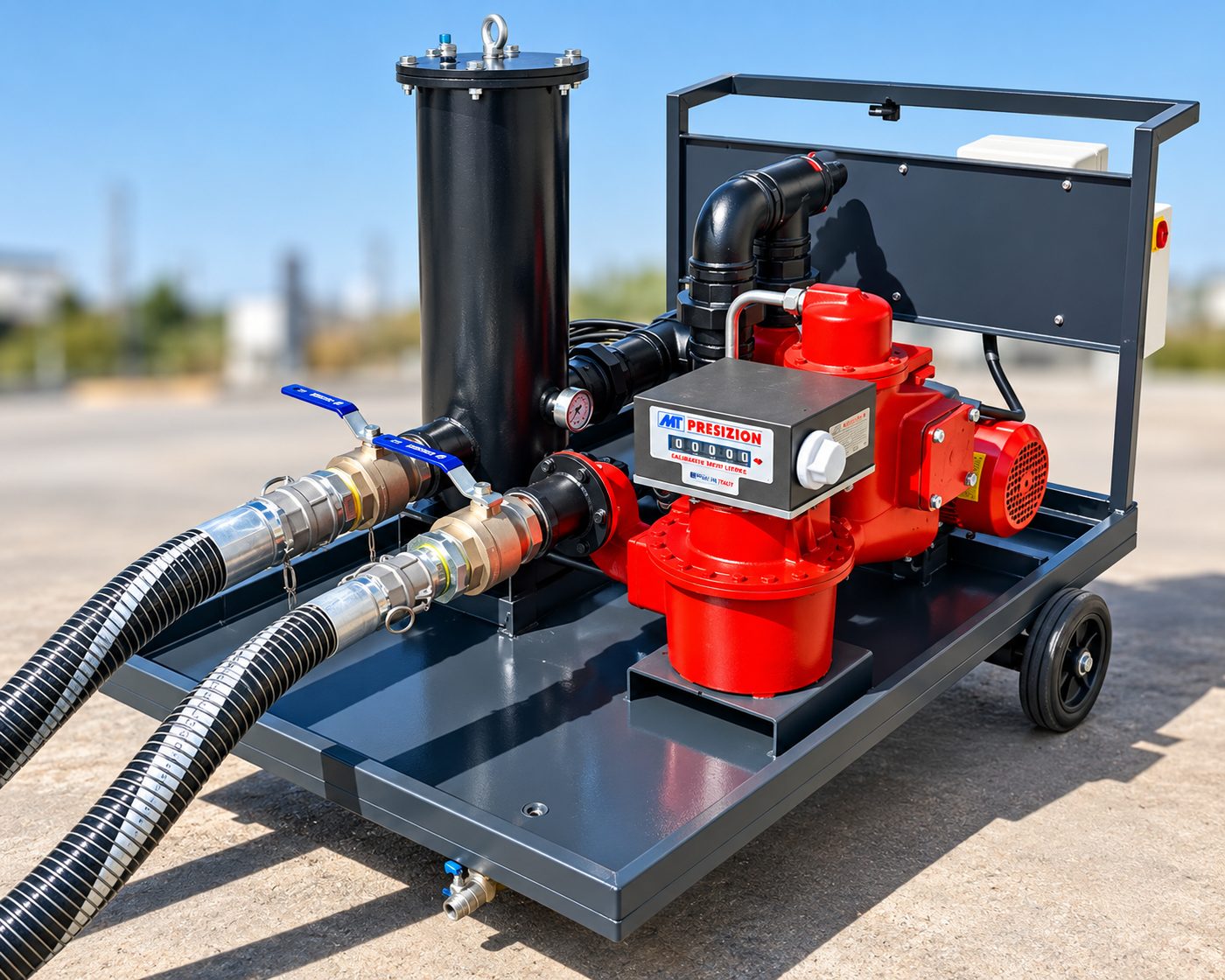
An explosion-proof (ATEX) fuel pump is a pump certified to operate safely in atmospheres where flammable vapors, gases or dust may be present. Its motor and electrical parts are designed so they cannot ignite the surrounding atmosphere — either by containing any internal spark or flame, or by limiting energy so ignition is impossible. For diesel, gasoline and other fuels, using an ATEX-rated pump in the hazardous zone is not optional; it is a safety and compliance requirement.
What “ATEX” actually means
ATEX comes from the French ATmosphères EXplosibles and refers to two European directives governing equipment used in explosive atmospheres. An ATEX-certified pump carries a marking that states the equipment group, category, and the gas/temperature class it is approved for. The marking is what proves the pump is legal and safe to use in a defined hazardous area — a pump without it should never be installed where fuel vapors can accumulate.
Hazardous-area zones: Zone 0, 1 and 2
Hazardous areas for gases and vapors are classified by how often and how long an explosive atmosphere is present:
- Zone 0 — an explosive atmosphere is present continuously or for long periods (for example, inside a fuel tank). Requires the highest equipment category.
- Zone 1 — an explosive atmosphere is likely to occur in normal operation (for example, around a dispensing point or an open transfer area).
- Zone 2 — an explosive atmosphere is not likely in normal operation and, if it occurs, only briefly (for example, the outer area around well-ventilated equipment).
The zone determines the equipment category you must use. A pump approved for Zone 1 can also be used in the less demanding Zone 2, but a Zone 2 pump must never be used in Zone 1.
Zone 1 vs Zone 2: choosing the pump
The practical question for most fuel sites is whether the pump sits in a Zone 1 area (near the nozzle, open transfer, tanker loading) or a Zone 2 area (further from the vapor source, well ventilated). Specifying a Zone 1-rated pump covers both and removes doubt, which is why many engineered fuel systems standardize on Zone 1 equipment for dispensing duties. The correct choice should always follow a proper area classification of the site, not a guess.
Other things that matter in a fuel pump
- Self-priming — the ability to draw fuel from below the pump without manual priming, important for tank-top and drum installations.
- Flow rate — matched to the task, from modest transfer duties to high-flow tanker loading.
- Dry-run and thermal protection — protects the pump if fuel runs out.
- Material compatibility — seals and internals rated for the specific fuel.
- Earthing/bonding — static control during transfer is part of safe operation.
Where ATEX fuel pumps are used
Anywhere fuel is moved in a hazardous area: mobile and containerized fuel stations, generator day-tank fill systems, bulk storage and depots, fuel polishing and transfer skids, mining and construction refueling, and marine bunkering. In every case the pump must be certified for the zone it operates in and installed to the manufacturer’s and site’s safety requirements.
Frequently asked questions
Is an ATEX pump the same as an explosion-proof pump? In Europe, “ATEX-certified” is the formal proof that a pump is explosion-protected for a defined zone. “Explosion-proof” is the general term; ATEX is the certification that backs it up.
Do I need ATEX for diesel? Diesel has a higher flashpoint than gasoline, but dispensing, heated or atomized diesel and confined areas can still create ignitable atmospheres — so ATEX-rated equipment is specified wherever a hazardous zone is identified.
Can a Zone 2 pump be used in Zone 1? No. Equipment rated for Zone 1 can be used in Zone 2, but never the other way around.
How do I know which zone my site is? Through a hazardous-area classification carried out for your installation; the pump is then selected to match the zone around the dispensing or transfer point.
Related pages
Explore Neftgen solutions: ATEX explosion-proof fuel pumps, mobile & containerized fuel stations, fuel transfer skids.
